
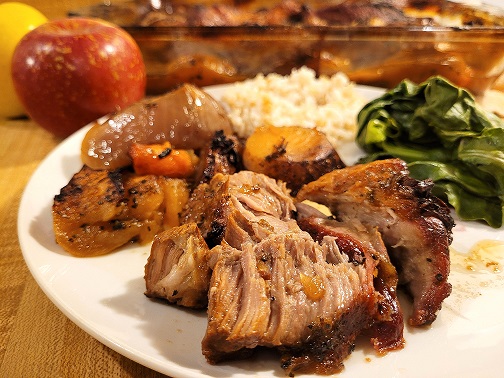
My apple braised pork roast recipe is easy and delicious! Made by cooking pork shoulder or butt in apple juice and apple cider vinegar in the oven along with spices, the meat turns out moist, tender, and flavorful. The braising liquid itself takes on a southern-style sweet and sour taste, making it extremely flavorful and unique. Plenty of yellow apples, potatoes, onions, and other vegetables are cooked along with the meat in the 9×13 baking pan, so it’s great as a one-pan meal—but I highly recommend serving this with a starch like rice, bread, or mashed potatoes to help soak up the amazing braising liquid. If you want to learn how to make apple braised pork roast, follow my step-by-step directions and watch the video below!
Apple Braised Pork Roast


Notes
Either pork butt or shoulder will work great in this recipe.
Ingredients
- 3-3.5 lbs pork roast (I used a pork butt, without the fat cap)
- 3-4 pounds of vegetables and apples (golden delicious apples, Russet potatoes, yellow onions, red onions, carrot, celery)
- 4 cups apple juice (I used 4 cups , but you may have to use more or less depending on the size of your roast and the amount of vegetables and apples you add to the pan)
- 1/2 cup apple cider vinegar
- 1 Tablespoon light brown sugar
- 1 Tablespoon white sugar
- 2-3 garlic cloves
- 2-3 bay leaves
- 1 1 oz packet onion soup mix
- 1 teaspoon onion powder
- 1 teaspoon garlic powder
- 1 teaspoon black pepper
- 1 teaspoon basil
- 1 teaspoon parsley
- 1 teaspoon oregano
- 1 teaspoon salt
- *oil for searing the roast in a pan before baking (optional)
Instructions
- Butter a 9×13-inch baking dish and set it aside.
- Trim the fat cap off the roast, if necessary.
- Sear the pork roast for 3 to 5 minutes per side until browned on all sides, about 20 minutes total. Transfer the roast to the prepared baking dish with the remaining fat side facing up.
- Deglaze the pan by pouring the apple cider vinegar into the hot skillet and scrape up the browned bits from the bottom of the pan.
- Add the onion soup mix to the pan and stir until dissolved and hydrated. Remove from heat and set aside.
- Arrange the apples, potatoes, onions, celery, and carrots around the pork roast in the baking dish.
- Add the whole garlic cloves and bay leaves around the roast and vegetables.
- Pour the apple cider vinegar and onion soup mixture evenly over the roast and vegetables. Be sure to coat the apples and potatoes to keep them from oxidizing.
- Sprinkle the onion powder, garlic powder, black pepper, basil, parsley, oregano, and salt evenly over the pork roast and vegetables.
- Warm 1 cup of the apple juice in a saucepan or microwave and dissolve the brown sugar and white sugar into it. Pour the sweetened apple juice into the baking dish.
- Add the remaining apple juice until the braising liquid comes at least halfway up the roast. You will usually need about 3 1/2 to 4 cups total.
- Cover the baking dish tightly with foil and bake for 2 hours at 350°F.
- Remove the dish from the oven and baste the meat and vegetables with the braising liquid.
- Take most of the foil cover off, but leave a small piece of foil over the meat to prevent the meat from drying out and the fat from burning.
- Continue cooking for about 2 more hours at 350°F, basting the roast and vegetables every 30 minutes. Remember to put the foil back over the meat after braising to prevent burning.
- Turn off the oven and let the roast rest in the warm oven for about 20 minutes.
- Serve the pork roast with the apples, vegetables, and braising liquid spooned over the top. This dish pairs especially well with rice and collard greens.
Recipe Review
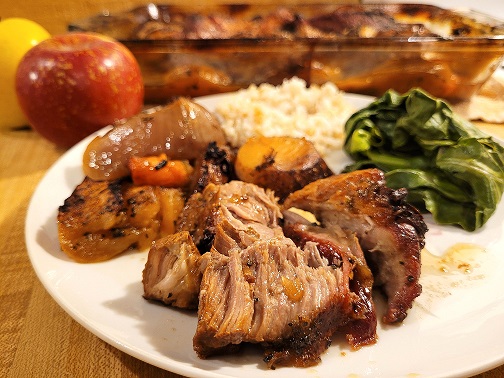
My apple braised pork roast recipe was a big success. The pork turned out incredibly tender and flavorful, with the braising liquid infusing every bite with a rich sweet and sour apple-forward taste. The combination of apple juice, cider vinegar, and a touch of sugar created a balanced contrast that gave the dish a comforting Southern-style depth without being overly sweet or heavy.
Most of the pork broke down into fork-tender pieces, while the vegetables softened beautifully and absorbed the braising liquid. The potatoes held their shape but became fluffy inside, and the onions and carrots developed a natural sweetness that blended perfectly with the sauce. The apples were especially good, breaking down into a soft, almost applesauce-like texture that added a sweet contrast to the savory meat.
Although this was great on its own, I especially liked it served over rice, where the braising liquid soaked in and acted almost like a gravy. The pork, vegetables, and softened apples all worked together in each bite, and the sauce tied everything together. A side of collard greens also helped balance the richness and added a nice earthy contrast.
If you’re looking for a simple oven braise that delivers big flavor with minimal effort, this apple braised pork roast is a great option for a Sunday dinner or holiday meal. It’s an easy one-pan recipe that fills the kitchen with great aroma and delivers a comforting, classic-style roast every time.
Apple Braised Pork Roast FAQs
Pork butt works best because it becomes tender and flavorful during long, slow cooking. Pork shoulder is another great option as well because it has a lot of connective tissue, so either cut would be great.
It has a sweet and sour flavor with a noticeable apple-forward sweetness and mild tang from the cider vinegar. Together with the spices, this dish has a comforting, Southern-style taste that would make any old-fashioned country cook happy.
Cooking a pork roast in the oven takes 3-4 hours at 350°F. The first 2 hours of covered cooking are essential for tenderizing the meat, then the final 1-2 hours concentrates the flavors in the braising liquid—so adjust the final phase based on how much liquid you add to the 9×13 baking pan.
Yes—cover the pork roast for the first 2 hours to create a warm, moist environment that’ll tenderize the meat. After that, leave most of the pan uncovered to reduce the braising liquid—but remember to keep the moist itself covered to prevent dryness and burning.
Searing adds deep flavor by browning the outside of the meat and developing a richer taste. It also helps lock in juices and improves the overall texture of the roast.
Keep it covered for part of the cooking time and make sure there is enough braising liquid in the dish. Basting during the final stage also helps keep the meat moist and flavorful.
It’s highly recommended to trim most of the fat cap because it can burn during cooking. Removing it also prevents the braising liquid from becoming overly greasy.
I recommend Golden Delicious apples since they’re sweet—but not overly sweet—and tend to hold up to cooking better than other varieties. Granny Smith would likely be a good choice as well, but I’d personally avoid super sweet varieties like Fuji or Honeycrisp since I think they’d likely disintegrate with the prolonged cooking.
Potatoes, onions, carrots, and celery are great because they hold up the cooking very well. Other root vegetables like parsnips or turnips would probably be fine, but I’d avoid beets because the red color would likely bleed into the braising liquid.
Rice, mashed potatoes, or crusty bread all pair well with the sweet and sour braising liquid. Collard greens or green beans would be good southern-style sides, too.
Related Recipes
If you liked this dish, you might also want to try:
Chuck Roast in the Oven – Baked with potatoes and carrots, this is another one-pan meal that’s super savory and satisfying.
Mississippi Pot Roast with Potatoes and Carrots – Pepperoncini peppers and ranch dressing mix make the braising liquid super tangy and flavorful.


